kaka kaka
Aintransitive verb
non-singular subjectspend time talking, chatter for one's pleasure (opp. hohole, speak for a specific purposesujet non-singulierpasser du temps à causer, converser à bâtons rompus, pour l'agrément (opp. hohole, parler avec un but précis)
| Talōw, nēk van me hiy no dōyō kaka.Come to my house tomorrow, so we can talk (i.e. spend time together).Demain, viens chez moi, on pourra causer (i.e. passer du temps ensemble). |
| Kamyō kaka galsi ēwē!All we did was talk, with no hidden motive.Nous ne faisions que discuter, en tout bien tout honneur (i.e. sans arrière-pensée…). |
| Dō ma-kaka tō aē anoy.We already spoke about that yesterday.On en a déjà parlé hier. |
Btransitive verb
singular subjectexplain, tell ‹s.th.› in detail (to s.o., hiy ① ⓒ)sujet singulierexpliquer, raconter ‹qqch› en détails (à qqn, hiy ① ⓒ)
| kaka m̄ōleg[tell-clear] clarify[raconter-clair] clarifier |
| kaka vēglal[tell-relate] explain, demonstrate[raconter-faire savoir] expliquer, démontrer |
| Nēk kaka tog ! Nēk ma-van qele ave ? Kaka tog me hiy no.Tell me! What happened to you? Come on, tell me all about it.Raconte-moi! Qu'est-ce qui t'est arrivé? Allez, raconte-moi tout. |
📙 Désigne une parole spontanée, discursive, non formalisée; opp. vap ‘dire textuellement, réciter ‹poème, chant, conte›’.
Cnounna-kaka
1 – conversation, chat, interview, dialogueconversation, causerie, entretien, dialogue
| Kōyō su m̄ōkheg goy na-tkelgi bah nen e kōyō qētēg lok na-kaka no-yō.After a short pause, they pursued their conversation.Après une courte pause, ils ont repris leur conversation. |
2 – explanations, narrative, story, monologueexplications, récit, histoire, monologue
| Tō na-kaka namuk ni-bah hōw gēn.closureAnd this is the end of my story.clôtureEt c'est ici que se termine mon histoire. |
| Nok so kaka biyin̄ ēwē na-kaka non Fred ba-talmiy.I just want to complete Fred's talk about sleepwalking.Je veux juste compléter l'exposé de Fred à propos du somnambulisme. |
📙 Désigne un discours familier, sans apprêt (opp. no-toytoy ‘allocution’), mais appréhendé dans sa longueur (opp. no-hohole ‘phrase, mot, parole brève’).
3 – hencenarrative account, scenario, either in the form of an oral narrative, or in theatric, film, book form, etc.; work of fiction (opp. actual events)par exthistoire, soit sous forme de récit oral, soit de théâtre, de film, de livre, etc.; fiction (opp. les événements eux-mêmes)
| Ino tateh nen, ba no mo-yon̄teg na-kaka nan.I wasn't there, but I heard about it [I heard the story].Je n'y étais pas, mais on m'en a parlé [j'en ai entendu le récit]. |
| Mey gōh et-hiywē te, na-kaka nan ēwē.This is not the truth, it's only an account of it (i.e. This film is not a report, it's a re-make with actors…)Ceci n'est pas la vérité, ce n'en est que le récit (i.e. Ce film n'est pas un reportage, c'est une reconstitution, avec des comédiens…) |
kakal kakal intransitive verb
Redup. kal ①
1 – animal, baby+crawl, walk on all foursanimal, bébé+ramper sur le sol, marcher à quatre pattes
synonymkal ①
2 – adultwalk carefully or slowly, stooping down, either due to old age, or as one looks for s.th. on the groundadultemarcher lentement, penché en avant, soit du fait du grand âge soit parce que l'on cherche qqch sur le sol
| Kōyō van yow a– vēlvēl wōsēm. Kōyō kakal van…They went to look for shellmoney. So they were walking carefully (on the reef)…Elles se rendirent tous deux chercher des coquillages. Elles avançaient donc pas à pas (sur le récif)… |
3 – young man+sneak into the bedroom of a woman, typic. at night, for a sexual encounterjeune homme+se faufiler nuitamment dans la maison d'une femme, en vue d'une relation sexuelle
| No mo-yon̄teg nēk kakal hiy ēgnōn mayanag an̄qōn̄!jocularLast night I heard you sneak into the chief's wife's bedroom!plaisanterieCette nuit je t'ai entendu te faufiler chez la femme du chef! |
| So akteg mi no-tos nen? Nēk tiple kakal aē!genericWhy do you need that torch? to go see girls at night?génériqueÀ quoi sert ta lampe-torche? à aller voir les filles la nuit? |
kakamoy noun
MakiraKakamoraa mythical creature
Mythology
1 – Dwarf, Pixie: a mythical, elf-like creature looking like small people, and living in community in the wildNain, Gnômes: créature mythique, sorte d'elfe de petite taille, vivant en communauté à l'état sauvage
📙 Une étymologie populaire lie leur nom à kaka moymoy, litt. ‘parler grommeler’, en référence au charabia que les Gnômes sont censés parler.
📘 A folk etymology links their name to kaka moymoy, lit. ‘talk grumble’, with reference to the gibberish supposedly spoken by these creatures.
Les Gnômes de la forêt ✧ Dwarves in the bush ✧ Kakamoy
Ige kakamoy kēy togtog lē-m̄ēt siso lē-lē, wa kēy et tagtaghiy te kēy. Kēy ququleg la-gayga a la-maltow. Yatkelgi kēy te-byin̄ vēh n-et, yatkelgi tateh. Ba kēy et matmat te: kēy no-togtog lap ēwē qele anen.
Les Kakamoy vivent dans la forêt ou dans les grottes, et ne se lavent jamais. Ils ont coutume de se balancer aux lianes, dans les bois. Ils peuvent être bienveillants envers les hommes, mais pas toujours. Ils sont immortels, et éternels.
The Kakamoy live in the forest or in caves, and never wash. They like to swing on vines in the bush. They are sometimes kind to men, but not always. They are immortal, and eternal.
kaka t-am̄ag na-kaka t-am̄ag nakaka taŋ͡mʷaɣ̞
na-kaka
noun
Literature
chat of yesteryearhistoric conversation, relating facts considered as authentic; hence myth, legend, history – opp. na-vap t-am̄ag ‘folktale, story’causerie d'autrefoisconversation historique, relatant des faits considérés comme authentiques, d'où mythe, légende
| na-kaka (t-am̄ag) non Iqetthe legend of Iqet (demiurge)le mythe d'Iqet (démiurge) |
| na-kaka ne Tamat Weyweythe legend of the devil Weyweyla légende du Démon Weywey |
| Na-kaka t-am̄ag. Veg ma-van tabay me.That's what we call History, because it's been handed down from generation to generation.C'est ce qu'on appelle l'Histoire, car ç'a été transmis de génération en génération. |
Les mythes, causeries d’autrefois ✧ Myths: the conversations of olden times ✧ na-kaka t-am̄ag
Alors que le conte (na-vap t-am̄ag) se présente comme un texte littéraire assez formalisé, la ‘causerie’ (na-kaka t-am̄ag) est perçue comme une simple conversation, sans structure ni formule particulières. Aussi est-elle parfois moins valorisée que les contes (Na-kaka ēwē. ‘Ce n'est qu'une causerie’), même lorsqu'elle relate des légendes ou des événements historiques d'importance.
kal1 kal intransitive verb
PTB°ᵑgalogo up, climb; crawl; enter, exit; upwardsPNCV*galoclimb, crawl
Redupkalkal
2 – espcrawl upwards, hence emerge, risespécramper vers le haut, d'où sortir, émerger, remonter
| Ne-met so ni-laq tot-matap, tō nō-wōsēm ni-kal me.When the tide is low early in the morning, cone shells rise to the surface.Si la marée est basse très tôt le matin, le coquillage Conus remonte à la surface. |
3 – babycrawl, walk on all foursbébéramper, marcher à quatre pattes
| Inti ma-kal qelen̄.Your son has disappeared (on all fours).Ton fils a disparu (en marchant à quatre pattes). |
| Kē ni-kalkal. Kalkal mi nō-qōn.babyHe was able to crawl. Crawling on his knees.bébéIl pouvait ramper, rampait sur ses genoux. |
4 – 1st element of compoundscross the threshold in either direction, walking1er élément de composéfranchir le seuil dans un sens ou dans l'autre, en marchant
| kal bat = kalbat*enter, go inentrer |
| kal lō = kalō*exit, go outsortir |
| Kē ni-van i van e, tō kē ni-kal heylō le-mteēm̄ en.As he walked, he went through a sort of (stone) gate.En chemin, il franchit une sorte de porte (en pierre). |
kal2 kal postverb
PTB°ᵑgalogo up, climb; crawl; enter, exit; upwardsPNCV*galoclimb, crawl
upwardsvers le haut
SyntaxeCet adverbe est suivi tantôt du directionnel hag ① ‘en haut’, tantôt de hay ①▻② ‘vers l'intérieur des terres’.
SyntaxThis adverb is followed sometimes by the directional hag ① ‘up’, sometimes by hay ①▻② ‘inland’.
1 – with intransitive V(do V) going up, upwardsavec V intransitif(faire V) en montant, vers le haut
| at kal look up in the airregarder en l'air |
| yem kal hag lē-qētēngeclimb up a treeescalader un arbre |
| Lep no-hos nonon, yow kal hag aē, valag ēgēn!He jumped up on his horse, and galloped off!Il sauta sur son cheval, et partit au galop! |
| nō-Qōn̄ M̄ōl-kal Ascension dayjour de l'Ascension |
2 – with transitive V(move s.th.) up, so as to place it higheravec V transitif(mouvoir qqch) en le plaçant en hauteur
| lep kal take ‹s.th.› up, pull ‹s.th.› upmonter ‹qqch› |
| Nēk mōk kal hag le-mteep.Put it up above the fire.Pose-le (en hauteur) au-dessus du feu. |
| Ige mo-wos kal kē lo-wolwol.They crucified him [lit. nailed him up] on the Cross.Ils l'ont crucifié [litt. cloué monté] sur la Croix. |
3 – +hay ①▻② ‘inland’(do V) towards the island; going inland+hay ①▻② ‘vers les terres’(faire V) vers l'île, vers l'intérieur de l'île
| Na-mtig mal hal kal a Alkon.The coconut had floated all the way to Gaua.La noix de coco avait flotté jusqu'à l'île de Gaua. |
| Ni-siok e ni-gamgam kal hay me.The ship was sailing in (towards the island).Le bateau faisait voile vers l'île. |
| Rastētē ni-hō kal hay me nen, tō ni-vay kal hay me.Rastete paddled ashore; and (after landing) he set out to walk inland.Rastété pagaya vers la côte, puis (ayant accosté) se mit en marche vers l'intérieur de l'île. |
| Kē ni-suwsuw bah e ni-m̄ōl kal.As he finished bathing (in the sea), he walked back up (to the village).Une fois terminée sa baignade (en mer), il remonta (au village). |
4 – figgrowing up, more and morefigen augmentant, en s'accroissant
| Kemem mi-lililwo kal me…As we grew up…À mesure que nous avons grandi… |
| Na-ga e mi-lwo, me-hyo kal hag.The kava plant has grown, it has gone up.Le plant de kava a poussé, il a grandi. |
kalbat kalᵐbat
kal bat
intransitive verb
Redupkalkalbat
1 – walk in, go in, enterentrer, pénétrer à l'intérieur
| Tita nēk gōh? Kalbat me!+me ‘hither’Mum, is it you? Come on in!+me ‘en venant’Maman, c'est toi? Entre ! |
| Kōyō kalbat hay a le-lo lē.+hay ‘inwards’They walked inside the cave.+hay ‘vers l'intérieur’Ils pénétrèrent à l'intérieur de la caverne. |
| Kōyō wak na-mteēm̄ tō kē ni-kalbat; kalbat hay alon.They opened the door, and she came in; she came inside.Ils ouvrirent la porte, et elle entra à l'intérieur. |
| Kem kal bat alon, tō ma-hag bat tō aē.We went in, and stayed inside.On est rentrés dedans, et restés à l'intérieur. |
| Tō kēy kal bat le-leg.They all walked in (the church) for the wedding.Tout le monde entra (dans l'église) pour la cérémonie de mariage. |
| Nō-mōmō ni-kal bat lelo qayan̄.The fish got inside a hole.Le poisson pénètre dans une brèche. |
| Iqet ni-kalbat a l-ēwe mitig en.magicIqet went inside the coconut.magieIqet entra à l'intérieur de la noix de coco. |
kalen̄ kalɛŋ intransitive verb
Cf. (?) qelen̄
lose o.'s way, get lostse perdre, s'égarer, faute de connaître son chemin
| Nēk ta-kalen̄ qiyig.You'll get lost.Tu vas te perdre sur la route. |
| Dam galsi no lē-klek, nēk tiple kalen̄.Stay behind me, so you don't get lost.Reste bien derrière moi, tu pourrais te perdre. |
kalō kalʊ
kal lō
intransitive verb
RedupkakalōRedupkalkal lō
shift outwardsgo out, appearse-déplacer vers-l'extérieursortir, apparaître
1 – go out (from, den) esp. out of a closed place such as a housesortir (de, den), spéc. d'un lieu fermé de type maison
| Kal lō tō me!Come out!Sors de là! |
| Ne-leg ni-bah, gēn kalō me den n-ēm̄yon̄.At the end of the wedding, everyone comes out of the church.À la fin du mariage, tout le monde sort de l'église. |
| Nēk ta-kalō vēh me so gēn siseg?Can't you come out and play with me?Tu ne peux pas sortir, qu'on joue ensemble? |
| Kē et-kakalō te aslil, kē ni-haghag vēlēs namun a lelo ēm̄ en.She never goes outside, she stays at home all the time.Elle ne sort jamais dehors, elle reste toujours chez elle. |
| Ni-siok so ni-kal bat van, ba na-mtehal nu-su. Tō kē ni-yowvaysam nen tō kē ni-kal lō lok ēgēn.channelThe boat had dived into the canal, but it proved to be too narrow. So he decided to make an about turn in order to get back out.chenalL'embarcation s'était engouffrée dans le chenal, mais celui-ci s'avéra trop étroit. Il décida donc de virer de bord, afin d'en ressortir. |
2 – move from somewhere sheltered (e.g. forest) to an open space (e.g. clearing, village square, road, beach)passer d'un endroit couvert (ex. forêt) à un endroit dégagé (ex. clairière, place du village, route, plage)
| kalō yow alearrive / open on to the beach (coming from the bush)arriver / déboucher sur la plage (en venant de la brousse) |
| Ige ba-mag kēy kakal lō me telepnō ēgēn.The namag dancers are arriving [lit. coming out]on the main square.Les danseurs du namag sont en train d'arriver [litt. de sortir] sur la grand'place. |
synonymseylō
3 – appear, become visible or perceptible (for an outside observer)apparaître, devenir visible ou perceptible (pour un observateur extérieur)
| Kē ni-et yow qele kē, ni-siok vitwag ni-kal lō.He looked out towards the sea, and saw a boat appear [lit. saw come out]Il regarda vers la mer, et vit apparaître [litt. vit sortir] un bateau. |
| Kē ni-yah ōlōl nē-yēdēp e na-ln̄an ni-kal lō.As she grated the palm tree branch, the noise could be heard [lit. the voice 'came out'].Comme elle râpait la branche de palmier, le bruit se fit entendre [litt. la voix ‘sortit’]. |
4 – abstrappear, come into existenceabstrapparaître, venir à l'existence
| Na-tmat Weywey kē ma-kalō me qele gēn.This is how the demon Weywey appeared (i.e.this is its origin).C'est de cette façon que le démon Weywey est apparu (i.e. c'est son origine). |
5 – plant, flower+begin to grow: grow, burgeon, budvégétal, fleur+commencer à croître: pousser, bourgeonner
| Na-tawhi tēnge gōh kē nu-su leptō, kē kalō leptō yow.The flowers of this plant are still minute, they're still at the bud stage [lit. are still coming out].Les fleurs de cette plante sont encore minuscules, elles en sont encore au stade de bourgeon [litt. sont encore en train de sortir]. |
kamkam kamkam
Polyn.kamu
Aintransitive verb
chew betel nut: consume a mix of areca nut (no-womtigtig), together with a leaf of betel (no-yogehmyaw) and lime (na-laēm)mâcher le bétel: s'adonner à la consommation de noix d'arec (no-womtigtig), accompagnée de feuille de bétel (no-yogehmyaw) et de chaux (na-laēm)
📙 Cette pratique n'est pas traditionnelle au Vanuatu, mais a récemment été importée des îles Salomon.
📘 This practice is not traditional in Vanuatu, but was recently imported from the Solomon Islands.
kamtēl kamtɪl personal pronoun
1st exclusive trial pronoun: the three of us, i.e. me plus they twopronom personnel 1e exclusive triel: nous trois, i.e. moi moi et eux deux
kamyō kamjʊ personal pronoun
the two of us, we two, ie. me him/her; 1exc Dualnous deux, nous, i.e. moi et lui/ elle ; 1exc Duel
kaskas na-kaskas nakaskas noun
Flora
colloqflower, typ. flower with coloured petals, used as a decorative object (opp. teweh or tawhi~ 'flower as part of a plant, development phase of a plant'): flowers planted in one's hair, used on festive occasions, grown in a flower garden, etc.famfleur, typiq. fleur à pétales colorés, employée comme objet ornemental (opp. teweh ou tawhi~ ‘fleur, en tant qu'élément d'un végétal phase de développement d'un végétal’): fleurs plantées dans les cheveux, utilisées dans les décorations festives, cultivées dans un jardin d'agrément, etc.
| nē-tqē kaskas[flower garden] an ornemental garden (opp. vegetable garden)[jardin de fleurs] un jardin ornemental (opp. jardin potager) |
| Ige hah yak na-tgop, tō sal na-kaskas hōw aē.The wedding cake is carried in, and then decorated with flowers.On transporte le gâteau de mariage, puis on le décore avec des fleurs. |
| Kēy ne-ptig geh na-kaskas lē-qtēy.They all put flowers in their hair.Ils se sont tous mis des fleurs dans les cheveux. |
keh kɛh transitive verb
splash ‹s.o.› by throwing water at himéclabousser ‹qqn› en lui projetant de l'eau
| Kēy me-keh sen̄ey no.They splashed me, I'm drenched.Ils m'ont éclaboussé, je suis trempé. |
key kɛj transitive verb
Motakereagwipe utterly away
Redupkeykey
rareevacuate, eliminate ‹unwanted substance: gravel, sand, water...›rareévacuer, éliminer ‹une matière gênante: gravier, sable, eau…›
| keykey nē-vēthiyle mi na-mne-geeliminate sand by handéliminer du sable avec la main |
keybē ne-keybē nɛkɛjᵐbɪ noun
Architecture
light horizontal bamboo stems, fixed three by three at the lower extremity of the rafters (nō-qōs) along the roof edgelégères gaulettes horizontales, fixées trois par trois sur l'extrémité inférieure des chevrons (nō-qōs) tout au long du rebord du toit
Étymologielitt. ‘évacuer l'eau’, car la fonction de ces longues tiges est de laisser s'écouler l'eau de pluie.
keykeybeye ne-keykeybeye nɛkɛjkɛjᵐbɛjɛ noun
Birds
Uniform Vanikoro Swiftlet, entirely black, 13 cmMartinet de Vanikoro, au plumage entièrement noir, 13 cmAerodramus vanikorensis.
kē1 kɪ deictic
first degree deictic, of insistent nature: 'right here, exactly this' (opp. gōh, neutral proximal deictic)déictique de premier degré, à valeur proximale et plutôt insistante: ‘ici même, ceci précisément’ (opp. gōh, déictique proximal neutre)
| qele kemem kē enjust like us heretout comme nous que voici |
| tog tō (gōs)kēin the current situationdans la situation actuelle |
| mey kērarethis onerarecelui-ci |
| Tateh et hay le-pnō kē.There's no one in this particular village.Il n'y a personne dans ce village-ci. |
| Na-maygay ak tō no kē!Personally, I've got terrible hunger pangs!Moi, tel que tu me vois, je suis tiraillé par la faim! |
SyntaxeCompatible avec toutes les positions, excepté la finale d'assertion (cf. agōh).
gōskē
gōh kē
deictic
first degree deictic, of insistent nature: 'right here, exactly this' (opp. gōh, neutral proximal deictic)déictique de premier degré, à valeur proximale et plutôt insistante: ‘ici même, ceci précisément’ (opp. gōh, déictique proximal neutre)
| tog tō qiyig gōskēnowadaysde nos jours |
| M̄alm̄al gōskē itōktōk a itōktōk !This girl is absolutely magnificent!Cette fille est absolument magnifique! |
| M̄otlap gōskē, kemem qan̄qan̄yis vēlēs a hōw le-qyēn̄i.Here in Mwotlap, we cook only in stone-ovens.Ici à Mwotlap, nous ne cuisinons que dans le four-à-pierres. |
SyntaxeLa combinaison agōh kē n'existe pas.
main entryqele kē
kē2 kɪ personal pronoun
Cf. kē ①
1 – he/she, him/her: pronoun for third person singular, of human referent, according to the Subject, Object, Complementil, elle: pronom de troisième personne singulier, à référent humain, en fonction de Sujet, Objet, Complément
| Kē itōk?He/She's OK?Il/Elle va bien? |
| No n-ēglal galsi kē.I know her/him well.Je le/la connais bien. |
| Dō tog hohole veg kē en.Don't talk about him/her.Évitons de parler de lui/d'elle. |
2 – rareit, that: third person pronoun, of non-human referent (with no number contrast)rarecela: pronom de troisième personne, à référent non-humain (sans opposition de nombre)
| Kē ni-van se hōw!Go on, then [lit. that goes on]!Vas-y, continue [litt. ça continue]! |
SyntaxeUtilisé surtout en fonction Sujet. La plupart du temps (en Sujet et surtout en Complément), les référents non-humains donnent lieu à une anaphore zéro (sans kē): Mal bah. C'est fini.; Nēk m-etsas? Tu as vu?; No ma-van me veg. Je suis venu pour ça. En position adverbiale, l'anaphorique non-humain est aē.
SyntaxA non-human kē is found mostly in Subject position. The more usual case (as Subject and espec. as Object) is for non-human referents to be recalled by zero anaphora (with no kē): Mal bah. (It) is over.; Nēk m-etsas? Did you see?; No ma-van me veg. I came for (it).. The adverbial equivalent for non-human anaphora is aē ‘at it, to it+’.
kē3 nē-kē nɪkɪ noun
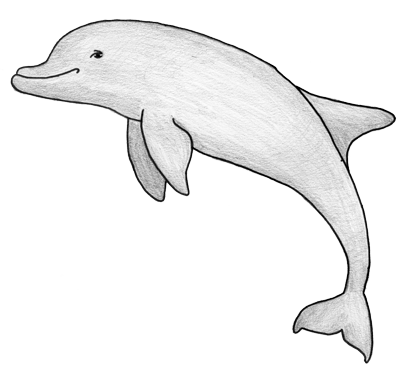
MotakioPNCV*guʀio
| Nē-kē, nē-kē, suwyeg kal tog inti !rhymeDolphin, dolphin, throw over your children!comptineDauphin, dauphin, lance-nous donc tes enfants ! |
kē ave en ˈkɪaˌβɛɛn interjection
Anthropology
jocul(?) where's that!“yeah right!”, “my foot!”: colloquial interjection expressing disapproval in response to a jocular provocation, partic. in response to a joke on kinship relations, as a way to ward it offplais(?) c'est où!“mon œil !”, “tu parles !”: interjection de désapprobation en réponse à une provocation, partic. à une plaisanterie sur les relations de parenté, comme pour s'en protéger
| Kōmyō tile akak na-mtege law ! – Ēt ! Kē ave en !Hey you two, don't flirt with each other too much! – Ha ha! No way!!Eh vous deux, attention à pas trop flirter ! – Ha ! Ça risque pas !! |
| Nēk na-mn̄es, ba nēk suvap qey se… – Kē ave en !OK you're a hardworker, but you're also a friggin' moron… – Ha ha, screw you!Tu bosses bien, mais bon dieu qu'est-ce que t'es con… – Eh, va te faire foutre! |
| Wulus nōnōm e, na-han iyē lok se? – Ēt ! Kē ave en !joke: fooling you into infringing a name taboo (v[i]lig ⓒ)Your brother-in-law, what's his name again? – Ha!! Get lost!! (you won't fool me)plaisanterie : te faire enfreindre un tabou sur les noms (v[i]lig ⓒ)Au fait ton beau-frère, c'est quoi son nom? – Ha!! Vade retro !! (je vais pas me faire avoir) |
📙 Interjection prononcée dans le cadre de joutes verbales ludiques, typiquement entre hommes.
📘 Interjection uttered daily during verbal sparring, typical among men, in ways similar to dap greetings.
kēh kɪh
kēs
interjection
utterance-initialalas! Interjection expressing a strong and negative emotion: unpleasant surprise, annoyance, sadness+en début d'énoncéhélas! Interjection exprimant une émotion forte et négative : surprise désagréable, agacement, tristesse+
| Kēs! Nemgaysēn, yohē! Nok et-ēglal qete na-hamōyō.Oops! Sorry my friends, but I don't know your names yet.Aïe! Désolé mes amis, mais je ne connais pas encore vos noms. |
| Kēh! Ignik ma-mat veteg no gōh, et-ēal te so no t-ak qele ave.Oh god – my wife died upon me, I don't know what to do now.Mon dieu – Ma femme a quitté la vie, je ne sais plus quoi faire. |
| Kēh, gēn vēlwoy ēgēn!Alas! We're parting now!Hélas, on se dit adieu maintenant ! |
kēkēn kɪkɪn adjective
huge, immenseimmense, grand
| Na-mya bē nan nē-kēkēn len̄ qele nō-tōti beg nōk.That eel was absolutely huge, like the trunk of that breadfruit tree over there.Cette anguille était gigantesque, comme le tronc de cet arbre-à-pain là-bas. |
| Vēwē nēk a nē-kēkēn.Thank you so much.Merci infiniment. |
PhrasSouvent renforcé par l'intensif len̄ ①.
PhrasOften reinforced by the intensifier len̄ ①.
kēkse~ nē-kēkse nɪkɪksɛ noun, relational
1sgnē-kēkse-k3sgnē-kēksa-n
flank, side of ‹s.o., s.th›registre formelrareflanc, côté de ‹qqn, qqch›
| Ige tutu en, kē ni-kokm̄eg goy kēy a lē-kēksan.Hens huddle their chicks close to their breasts (to brood them).Les poules recueillent leurs poussins contre leur sein (pour les couver). |
| lē-kēkse vōnōalongside the villageà flanc de village |
lē-kēkse~ locative
figbesides ‹s.o.›; esp. denotes intimacy, warm protectionfigauprès de ‹qqn›; spéc. connote la proximité intime, la protection chaleureuse
| Kē lē-kēksek ēgēn.adopted childFrom now on, he's by my side.enfant recueilliDésormais il est auprès de moi. |
| Kimi no-togtog lē-kēksamem me M̄otlap kē en.You live close to us, here in Mwotlap.Vous résidez auprès de nous, ici à Mwotlap. |
| Nēk wo van ave te, ba na-pnō nōnōm hag tō e lē-kēkse.Wherever you go, your homeland remains within you/inside you.Où que tu ailles, ta patrie demeure en ton sein/en toi. |
seekokm̄eg goyrecueillir contre son seincuddle under o.'s bosom
k‹ē›le~ nē-kle nɪklɛ
Blocativelē-kle~
Poss.lē-kle1sglē-klek3sglē-klan
1 – in the back ofbehind ‹s.o.'s› backdans le dos deà l'insu de ‹qqn›, dès qu'il a le dos tourné
| Kēy lelelhiy nēk lē-kle.They denigrate you the minute you turn your back.Ils te dénigrent dès que tu as le dos tourné. |
| Ba lē-klan me atgiy, ige famli nonon kēy et-bus te no.song(She loves me...) but behind her back, her family speaks ill of me.chanson(Elle m'aime...) mais dans son dos, sa famille dit du mal de moi. |
2 – backwards, behindvers l'arrière, derrière
| So nu-qun lok me lē-klan, kē nō-kōs.If her knees are facing backwards, that proves she's a devil nō-kōs.Si elle a les genoux inversés [tournés vers l'arrière], c'est la preuve qu'il s'agit d'un démon nō-kōs. |
SyntaxeTjs accompagné du directionnel me, signalant un repérage spatial par rapport au locuteur.
SyntaxAlways preceded by directional me, referring to the speaker's location.
3 – + time wordafter, period of time following an event. Especially in certain temporal expressions+ terme temporelaprès, période de temps postérieure à un événement. Surtout dans qqs expressions temporelles
| lē-kle wōl vētēlafter three months, in three months' timeaprès trois mois, dans trois mois |
| l-ēte itan, so nethap, lē-kle ēte vōyōeither next year, or the year after [lit. in the 'back' of two years]soit l'an prochain, soit dans deux ans [litt. dans le ‘dos’ de deux ans] |
kēlē kɪlɪ postverb
turning one's back; backwardsen tournant le dos; à reculons
| hag kēlēsitting backwardsêtre assis de dos |
Kēlkēlm̄ōlō kɪlkɪlŋ͡mʷʊlʊ proper noun
hollow backHollow-back: name of a fairytale character, an ogre who locked children behind his backdos trouéDox-creux: nom d'un personnage de conte, un ogre qui enfermait les enfants dans son dos
kēmtēl kɪmtɪl personal pronoun
the three of you: personal pronoun for 2nd person trialvous trois: pronom personnel pour la 2e personne du triel
kēy2 kɪj transitive verb
flick ‹s.o.› by lightly striking their arm or shoulder with o.'s finger, e.g. to send them a signal for some actiondonner une pichenette à ‹qqn›, typiq. sur le bras ou l'épaule, en guise de signal pour passer à l'action
kēy3 nē-kēy nɪkɪj noun
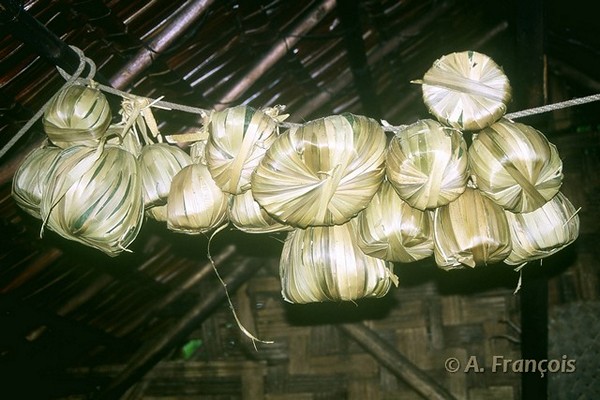
<°ᵑgorudryPOc*goRu‹vegetation› dry; dry coconut
Alim
traditional biscuit made in desiccated breadfruit (ne-beg, na-mte). Due to its long preservation, this biscuit serves as survival food in case of famine (na-may)biscuit traditionnel réalisé en fruit-à-pain (ne-beg, na-mte) lyophilisé. Du fait de sa très longue conservation, ce biscuit sert de nourriture de secours en cas de famine (na-may)
k[ē]yē~ na-kyē nakjɪ noun
Motakere-i
Poss.na-kyēna-kye
end, extremitybout, extrémité
| Be-kye-pnō[at the end of the islands] Solomon Islands[au bout des îles] les îles Salomon |
kēytēl kɪjtɪl personal pronoun
the three of them: third person trial pronouneux trois: pronom 3ème pers. triel
| Kēytēl m̄ōl lok hag l-ēm̄ no-ytēl.The three of them went back home.Tous trois rentrèrent chez eux. |
ki ki transitive verb
Bisl.kitapEng.key
pour ‹water› by turning a tap; take water this wayverser ‹eau› en actionnant un robinet; prendre de l'eau de cette façon
| Nok ki nē-bē den na-tap hōw lelo bankēn, tō nok in.I pour water from the tap into the cup, and then I drink it.Je verse l'eau du robinet dans la tasse, puis je la bois. |
| Kēy mi-ki sen̄ey no.They turned the tap on over my head! [lit. they tapped-wet me]Ils m'ont ouvert le robinet au-dessus de la tête! [litt. ils m'ont robinetté-mouillé] |
kil1 ni-kil nikil noun
Flora
False tamanu, bsl. Nambakura blong bushFaux tamanou, bsl. Nambakura blong bushGarcinia pseudoguttifera.
kilmat kilmat intransitive verb
Cf. mat° ③ ‘eyes’
Redupkilkilmat
winkfaire un clin d'œil
synonymmatbē▻②
kis °na-kis nakis possessive classifier
Grammar
my, mine: 1sg form of Food possessive classifier ga~ ③mon, ma: forme 1sg du classificateur possessif des Comestibles ga~ ③
main entryga~ ③
1 – literal(food) for melittéral(à manger) pour moi
| Lep te kis me !Give me some (to eat) !Donne-m'en un peu (à manger) ! |
| Vēwē nēk be-kis gengen.Thank you for this meal.Merci à toi pour ce repas (à moi). |
3 – fig(pleasant sensations) for me; hence my darlingfig(sensations agréables) pour moi; d'où mon chéri
| Na-kis inēk.[you're my delicacy] I fancy you / I love you.[ma sucrerie c'est toi] J'ai envie de toi / Je t'aime. |
| Na-kis wongē.[your face is my sweet] You're cute![ma sucrerie c'est ton visage] Tu es mignon(ne)! |
kofi no-kofi nɔkɔfi noun
Eng.coffee
coffee, esp. in the form of a hot beveragecafé, spéc. sous forme de boisson chaude
| Nok vēhge nēk so nēk van lep no-kofi.I asked you to go and get the coffee.Je t'ai demandé d'aller chercher le café. |
📙 À Motalava, le café est beaucoup moins souvent consommé que le thé.
seenē-bē sewsew
kokm̄eg kɔkŋ͡mʷɛɣ̞ transitive verb
Motakokom̄agkeep carefully; faithful
1 – formal registerrarebring in, offer affection and warmth (to s.o., goy); give refugeregistre formelrareoffrir le refuge (à qqn, goy); recueillir auprès de soi pour offrir de l'affection et de la chaleur
| Ige tutu en, kē ni-kokm̄eg goy kēy a lē-kēksan.Hens huddle their chicks close to their breasts (to brood them).Les poules recueillent leurs poussins contre leur sein (pour les couver). |
| Kōmyō mal kokm̄eg goy kē me qe so yantintimōyō ēgēn.You brought him in to your home, as if he were your child.Vous l'avez recueilli auprès de vous, comme s'il s'agissait de votre enfant. |
2 – metphbring consolation (to s.o., goy), comfortmétphréconforter, consoler qqn (goy) dans un moment de tristesse
| Na-tatay nonmem so Yatmangēn ni-kokm̄eg vasgēt goy gēn del le-tno toglolwon agōh.We pray that God gives us all shelter in this time of mourning.Nous prions que Dieu veuille tous nous réconforter en ce moment de deuil. |
seegoy ①▻①⓪
kokoym̄eg kɔkɔjŋ͡mʷɛɣ̞ intensifier
absolute, extreme, deep. Intensifier for certain psychological predicates (e.g. mōyōs ‘desire, like’, ēglal ‘know’, lolwon ‘sad’)absolu, extrême. Intensifieur de certains prédicats psychologiques (ex. mōyōs ‘désirer’, lolwon ‘regretter’, ēglal ‘connaître’)
| Tiy mōyōs kokoym̄eg mino yeh so nok so tiok nēk hag en.My deepest desire is to go there with you.C'est mon désir le plus vif que de te raccompagner là-bas. |
| Nok so ēglal kokoym̄eg.I need to know it perfectly.Il faut que je le sache complètement, sur le bout des doigts. |
| No-lolwon kokoym̄eg mino ni-van hiy ige nētnētm̄ey nonon, ige bōbō wa ige bōbō gēpgēp nonon.My deepest condolences go towards his children, his grandchildren and his greatgrandchildren.Mes condoléances les plus sincères sont pour ses enfants, ses petits-enfants et ses arrière-petits-enfants. |
koy no-koy nɔkɔj noun
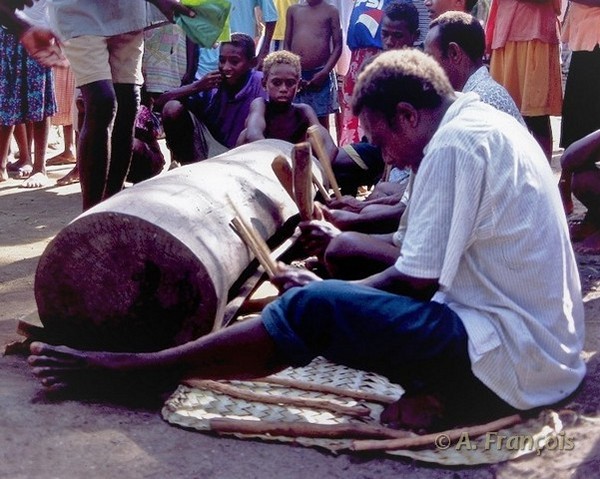
<°ᵑgóreMotakorethe trunk of a tree used as a drum…PNCV*(k,g)oremake (musical) sound
Music
large slit gong, carved out of a single tree trunklarge tambour fendu, creusé dans un tronc d'arbre
seebōlbōl
kōlōn̄teg kʊlʊŋtɛɣ̞ transitive verb
rummage ‹bag+›, skim through ‹book›, to find s.thfarfouiller ‹sac+›, feuilleter ‹livre› pour y trouver qqch
| Nok so kōlōn̄teg na-bakōs nōnōm?Do you want me to rummage through your case?Tu veux que je farfouille dans ta valise? |
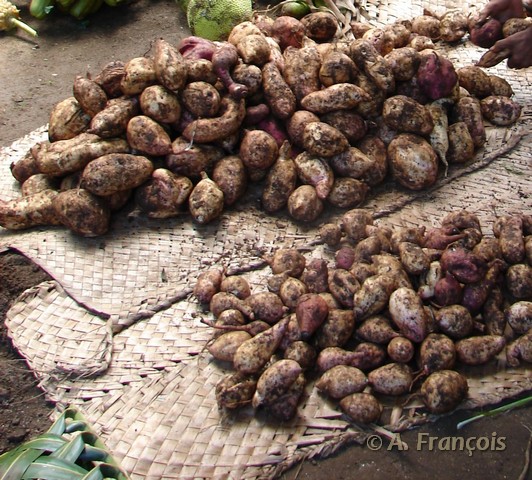
kuy kuj transitive verb
Redupkuykuy
1 – crunch: eat ‹hard food, e.g. biscuit› noisilycroquer: manger ‹un aliment dur, ex. biscuit› de façon bruyante
| Gēn kuykuy gangēn n̄ey!Supposing we ate [crunched] some almonds?Si on allait manger [croquer] des amandes? |
| Kōmyō nen a kōmyō kuykuy na-ptel mino agōh?So it was you who crunched (ate) my bananas (unripe, therefore crunchy)?C'est donc vous qui croquiez mes bananes (non mûres, donc croquantes)? |
| Na-m̄at nen a kē ni-kuykuy tutu en!So it was this snake who devoured our chickens!C'était donc ce serpent qui dévorait nos poules! |
derivativewomkuykuybiscuitbiscuit
Va croquer du coco ! ✧ Go bite some coconut! ✧ kuy na-mtig
Si tu enfreins tes obligations de respect envers certaines relations de parenté (Cf. vilig*), par ex. si tu prononces le nom de ton beau-frère, ou que tu entends une moquerie sur ton père sans réagir (Cf. Kē ave'n), alors on te lancera aussitôt Kuy na-mtig! “Va croquer du coco!”
C'est là une allusion, dit-on, à la manière ancienne de punir un tel contrevenant aux tabous de parenté (Cf. yēqyēq): on lui donnait à croquer (kuy) un morceau de noix de coco (na-mtig) souillé de terre, voire de fiente de poule. Aujourd'hui, cette coutume n'est plus guère mentionnée que sur le ton de la plaisanterie.
2 – espcannibal, Ogre+eat ‹a human being›, devour ‹s.o.› by cannibalismspéccannibale, Ogre+manger ‹un être humain›, dévorer ‹qqn› par anthropophagie
| Van vege! No tu-kuy m̄ētm̄ēt qiyig nagōm qiti! No mal kuy bah inti!words of the OgreEven if you go away, I'll end up eating your head bit by bit! I've already devoured your child!paroles de l'OgreTu peux bien partir, de toute façon je finirai bientôt par te dévorer la tête en petits morceaux! J'ai déjà dévoré ton enfant! |
| Ne-m̄e vatag me a kē tu-kuy qiyig gēn !Careful! The sea-snake is around here, he'll eat us all up!Attention! Le serpent-de-mer arrive par ici, il va tous nous dévorer! |
📙 Le verbe gen ‘manger’ n'est pas compatible avec un objet humain; seul kuy peut être employé dans ce contexte.
kuykuy-et
kuykuy
adjective
man eatercannibaldévoreur d'hommescannibale, anthropophage
| No-qo Kuykuy te-YōfolktaleThe Cannibal Pig of Roua atollconteLe Cochon Cannibale de l'atoll Roua |
| Le-pnō Kuykuy The Island of Cannibals (nickname for Malekula)L'île des Cannibales (surnom de Malekula) |
kuykuy vilih kujkuj βilih noun
kuyqal nu-kuyqal nukujk͡pʷal noun
Fish
noisy cruncherbiggest size (60 cm) taken by the reef fish ne-yek “Topsail drummer”, in its fourth and last growth stagequi croque bruyammenttaille maximale (60 cm) que prend le poisson récifal ne-yek “Ui-ua” (angl. Topsail drummer), dans sa quatrième et dernière phase de croissanceKyphosus cinerascens.