oel n-oel nɔɛl noun
Eng.oil
ohoo ˦ɔ.˨ɔ.˨˦ɔ
óòó
óòǒ
interjection
No! Interjection encoding disagreement or protestNon! Interjection exprimant le désaccord ou la protestation
| “Van me, kal bat me!” Kē wo “Ohoo, nok m̄ōl lok ēgēn.”“Come on, come on in!” – “No, he said. I'm going back.”“Viens, entre donc !” – “Non, répondit-il. Je m'en vais.” |
| Óòó, tēlhē! Nok dam kēmtēl.to a group who's leavingHey, my friends! Let me follow you!à un groupe qui s'en vaEh, les amis! Laissez-moi venir avec vous ! |
ok n-ok nɔk noun
MotaakaPOc*wagacanoe (generic); large sailing canoe
Techniques
boat, watercraft; esp. large collective canoe (opp. ni-siok, small individual canoe)bateau, embarcation ; spéc. grosse pirogue collective (opp. ni-siok, petite pirogue individuelle)
| n-ok gamgamsailing canoe, traditional sailing boatpirogue à voile, voilier traditionnel |
| n-ok gamgam a na-sam tēvēlyōsailing boat with two keelsvoilier à double balancier |
| n-ok gapgapairplane [lit. flying boat]avion [litt. bateau volant] |
📙 Les pirogues imposantes du passé ont aujourd'hui disparu. Le terme n-ok est donc obsolète, et cède du terrain face à ni-siok (y compris comme terme générique pour les bateaux), na-baklap ‘navire’, nō-bōōt ‘bateau à moteur’.
ol ɔl intransitive verb
Motaolo‹canoe› to come ashore
Redupolol
homophoneolol
1 – stretch out one's arm or handavancer le bras ou la main qqpart
| Nok ol van le-mnē.I shake your hand.Je te serre la main. |
| Kē ni-ol van le-mte-ep en, tō ni-lep hiy me ni-vinhe en.He stretched his arm up towards the roof above the fire, and brought down his quiver.Il tend le bras vers le toit au-dessus du feu, et en descend son carquois. |
casual synonymtan̄
ol kal ɔlkal
olkal
intransitive verb
Nav
+ directional hay ①▻②canoeland, reach the coast+ directionnel hay ①▻②pirogueaccoster, toucher terre
| Ni-siok ni-ol kal me lē-vēthiyle.The canoe is landing on the beach.La pirogue accoste sur la plage. |
synonymvēykal▻③
olol ɔlɔl
Motaoloolo
Aintransitive verb
give an offering during a magic or religious ritual; make a sacrifice using (mi) s.th (animal, vegetable, object),décerner une offrande au cours d'un rituel magique ou religieux; faire un sacrifice au moyen (mi) de qqch (animal, végétal, objet), génér. sur une pierre sacrée
| Kēy olol van hiy nu-vu mi no-qo wot.We make a magic sacrifice to the spirits with a castrated pig.On fait un sacrifice magique aux esprits, au moyen d'un porc châtré. |
olol mi n-ep construction
sacrifice by firecarry out a magic ritual consisting of lighting a fire in the oven and miming cooking a dish, then pronouncing the name of the person wished to be seen deadsacrifier avec un feuaccomplir un rituel magique, consistant à allumer un feu dans le four et y mimer la cuisson d'un plat, puis à prononcer le nom de la personne dont on souhaite la mort
on n-on nɔn noun
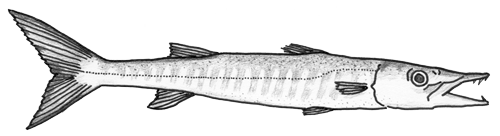
POc*qonosmature Sphyraena spp., possibly generic for all barracuda
op n-op nɔp noun
_op.jpg)
Motaovi
Flora
a tree (Hernandiaceae), bsl. Canoe-tree or Naovearbre (Hernandiacées), bsl. Canoe-tree ou NaoveGyrocarpus americanus.
owtam̄og ɔwtaŋ͡mʷɔɣ̞ transitive verb
explainexpliquer
| Itōk so gēn t-owtam̄og vēh me hiy gēn vivitwag.It's great that we can explain things to each other.C'est bien que nous puissions nous expliquer les choses les uns aux autres. |
| No et-ēglal te en, ba n-et vitwag me-plu me tō kē m-owtam̄og galsi me hiy no.I hadn't understood, but someone replied and explained clearly to me.Je n'avais pas compris, mais quelqu'un m'a répondu, et m'a tout expliqué clairement. |
synonymm̄ōleg ⓑ
oy1 ɔj transitive verb
Redupoyoy
wear ‹s.th.› on a string, around o.'s neck or on the shoulderporter ‹qqch› sur une ficelle, autour du cou ou sur l'épaule
oytitin ɔjtitin transitive verb
embrace ‹s.o.› round the shoulders; be arm in arm with ‹s.o.›enlacer ‹qqn› par les épaules; tenir ‹qqn› bras dessus, bras dessous
oyveg ɔjβɛɣ̞ transitive verb
Redupoyoyveg
hold ‹s.th.› against one's stomach by holding it from underneath in bent arms (opp. yuwu, hold s.th up in the air); fl.e.g. sit with ‹a baby› ine one's armstenir ‹qqch› contre son ventre, en le tenant par en-dessous dans ses bras repliés (opp. yuwu, tenir qqch en hauteur) ; ex. être assis avec ‹un bébé› dans les bras
| Kēy oyoyveg vatag hay na-lēt.They walk carrying firewood (in their arms).Ils marchent en transportant (dans les bras) du bois à brûler. |